Image and Components Description:
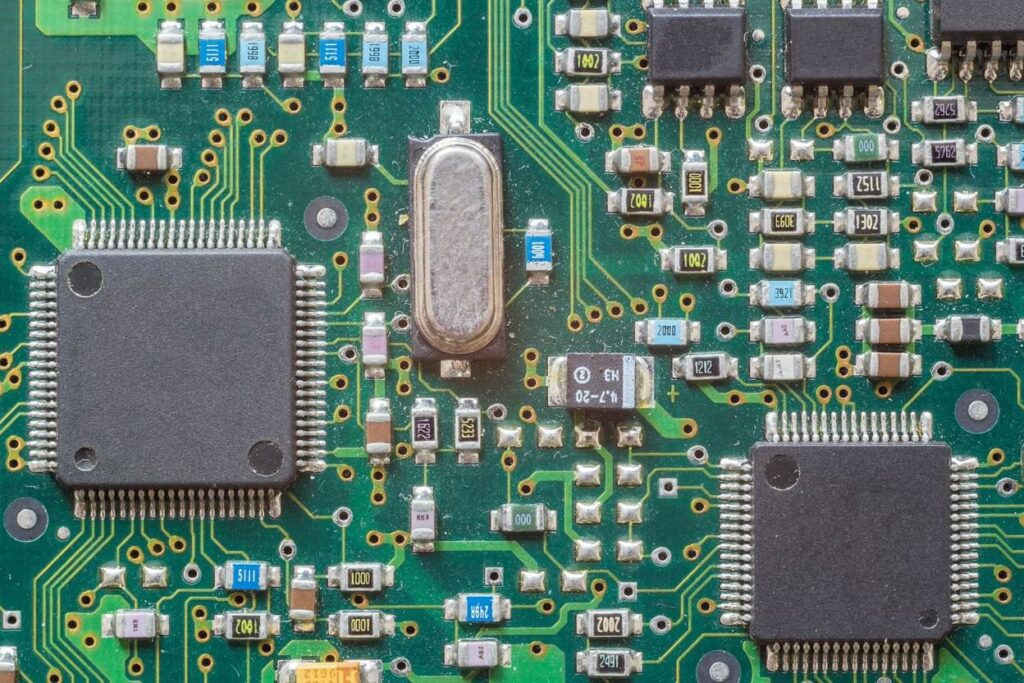
Components and Functions:
- Component 1: Battery
- Description: Comes in multiple shapes, the most common being rectangular, cylindrical or coin-shaped. Size also varies between different cases, with some being as small as a nickel while others are bigger than a person’s hand. Can consist of multiple different materials like lithium, zinc and manganese dioxide, or lead and sulfuric acid in the case of automotive batteries.
- Function: The function of a battery is to serve as a power source to a circuit. It’s what allows the circuit to work in the first place.
- Component 2: Resistor
- Description: Usually small and thin, with a metal wire going through a resistive element like carbon or ceramic.
- Function: Resistors are used to introduce resistance to a circuit, which itself is done so that certain components can work (LEDs need a certain amount of resistance to function) or to provide a voltage to a circuit that is not connected to power.
- Component 3: Switch
- Description: No real set size, shape, or material between uses due to the uses of the switch being so varied (Ex. Light switch vs circuit breaker). However, in the design of the switch there is typically a way to visually see if the switch is on or off.
- Function: The function of a switch is to control the flow of electricity by opening or closing the circuit. This can be used to turn an electrical device on or off or, in the case of a circuit breaker, automatically flip in order to protect the circuit or the user.
- Component 4: Wire
- Description: Long and thin, and are made of conductive metals like copper. Can be braided together to make larger wires.
- Function: Wires are used to connect the components in a circuit.
- Component 5: Capacitor
- Description: Looks similar to a resistor with wiring going through both sides of the component, however, the central component is usually much larger than that of a resistor. Central component can be cylindrical or rectangular. Is composted of two or more conductors with a dielectric between them like glass, ceramic, or mica
- Function: Is used to store electrical energy by building electrical charge on each conductor. This is used to regulate voltage, serve as a temporary battery, or produce light.
Origin Story: PCBs were invented by Paul Eisler, an Austrian inventor. Before their invention, circuits were soldered directly onto the chassis of a product. These circuits were often large and bulky, even fragile. Eisler first used the printed board in a radio receiver while working for a music publisher. At first, the invention did not take off, as the previous weaknesses stated were seen as a strength at the time: the simplicity of the vacuum tubes used in early circuits meant that replacing any parts was easy. However, the United States military saw the potential in the boards, first using them in proximity fuses during World War II. PCBs were used because they would be able to withstand the force of being fired from a gun. After the war, in 1948 the US government declassified the PCB technology and released it to the public. Businesses like Motorola used PCBs in their products because they were smaller, lighter, and cheaper than point-to-point circuitry.
Early Design Features: The first printed circuit prototype used printed, hand-soldered wires on an electrical board, with conductive ink connecting them. Eisler’s design instead used printed pathways, which was less time-consuming and more reliable than the previous design. The design that was ultimately patented by the US Government during the war featured a ceramic plate that was screen-printed with metallic paint for the conductors, and paint made using carbon powder was used for resistors. Capacitors were made of ceramic disks, and vacuum tubes were also used.
A World Without It: Without the printed circuit board, the world from a technological perspective would look very different. As said previously, a PCB allows for smaller and more complex circuitry. This means that without them, innovations in technology that used them simply wouldn’t happen and many inventions that used them would be bigger and bulkier than their modern counterparts: TVs, radios, electric toothbrushes, and more. Certain inventions couldn’t even exist, for example the smartphone. The complexity, form factor, and weight that a smartphone has is impossible to achieve without PCBs. The resulting product would be far too bulky and heavy to ever be portable. This also applies to headphones/earbuds, modern computers, laptops, and most peripherals like mouses, keyboards, and controllers. Not only this, but if the PCB never existed, the world might look very different than it does now: The proximity fuses made using the printed circuit board were an essential part of The Battle of the Bulge, which ended up being the deadliest battle for U.S soldiers during World War 2 with 18,000-20,000 casualties. If the artillery shells with proximity fuses weren’t there the battle most likely would have been bloodier or even could have been lost.

